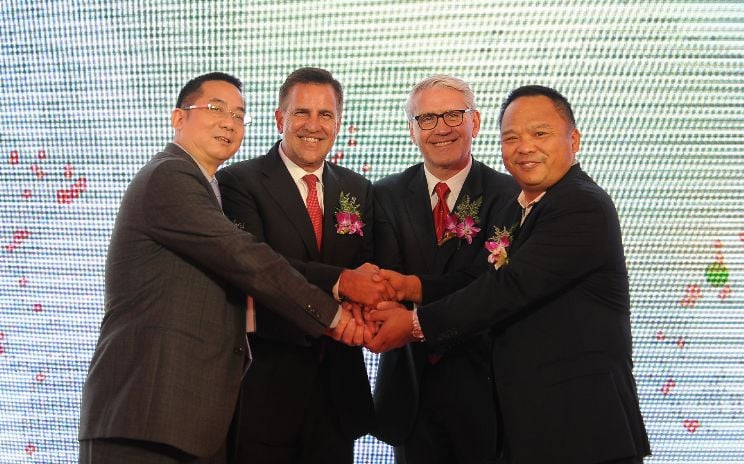
Ma Jianrong's $4.1 Billion Net Worth: Building Shenzhou International from the Ground Up
In the competitive global landscape of apparel manufacturing, few names resonate with the impact and quiet power of Ma Jianrong. As the visionary chairman behind Shenzhou International Group Holdings, one of the world's preeminent vertically integrated knitwear manufacturers, his journey from a textile factory floor to helming a multi-billion dollar empire is a testament to unwavering dedication, strategic foresight, and an astute understanding of market dynamics. With an estimated Ma Jianrong net worth reaching an impressive $4.1 billion (as per 2016 Forbes estimates), he stands as one of China's richest self-made billionaires and a significant figure on the world stage, a far cry from his humble beginnings.
This article delves into the remarkable rise of Ma Jianrong, exploring the confluence of China's economic reforms and his entrepreneurial genius that forged Shenzhou International into a powerhouse supplier for global giants like Nike, Adidas, Uniqlo, and Puma. We will uncover the strategic decisions that propelled the company to success and draw lessons from his incredible journey.
The Foundations of a Fortune: Ma Jianrong's Early Life and China's Economic Transformation
Born in 1965, Ma Jianrong's destiny seemed initially intertwined with the looms and fibers of a textile mill, much like his father, a textile worker himself. At the tender age of 13, Ma began his apprenticeship, immersing himself in the intricate world of textile production. This early, hands-on experience provided him with an unparalleled foundational understanding of the industry, honing his expertise and building the resilience that would serve him well in later years.
Ma's formative years coincided with a pivotal period in Chinese history. Starting in 1978, the People’s Republic of China embarked on a series of ambitious economic reforms, designed to unlock the nation's immense economic potential. The initial phases in the late 1970s and 1980s saw the decollectivization of agriculture, a cautious opening to foreign investment, and, critically for entrepreneurs like Ma, the permission to establish private businesses. These reforms laid the groundwork for a burgeoning entrepreneurial class. The subsequent stages in the 1980s and 1990s accelerated this transformation, lifting price controls, dismantling protectionist policies, and privatizing numerous state-owned enterprises, particularly in non-strategic sectors. This unprecedented shift created a fertile environment for those with vision and drive to thrive, and Ma Jianrong was perfectly positioned to seize these emerging opportunities.
From Struggling Mill to Global Powerhouse: The Genesis of Shenzhou International
The stage for Shenzhou International's birth was set amidst this wave of privatization. In the late 1980s, Ma Jianrong's father had risen to lead a state-owned textile plant in Shenzhou. However, like many state-run entities of the era, it grappled with dwindling state funding and mounting losses. Recognizing the latent potential and armed with a lifetime of textile experience, Ma Jianrong and his father made a pivotal move: they assumed control of the struggling plant as part of the nationwide privatization drive. This strategic acquisition marked the true inception of what would become Shenzhou International.
The immediate challenge was to transform a loss-making enterprise into a profitable venture. This required a radical shift in focus. While some of their larger, more established competitors diversified into unrelated fields—a common strategy at the time to mitigate risk—the Mas chose a different path. They concentrated their efforts on perfecting their core textile manufacturing capabilities, aiming for operational excellence and specializing in knitwear. This focused approach allowed them to channel all resources into refining production processes, enhancing product quality, and building a competitive edge. This dedication to their craft, combined with the adaptability to navigate a rapidly changing economic landscape, proved to be the bedrock upon which Shenzhou International was built. To delve deeper into this incredible transformation, you can read more about From Factory Worker to Billionaire: The Rise of Ma Jianrong's Textile Empire.
Strategic Vision and Global Reach: Powering the World's Top Sportswear Brands
Under Ma Jianrong's astute leadership, Shenzhou International evolved into a global force by mastering the art of being a premier supplier. The company didn't just produce textiles; it became an indispensable partner for some of the world's most iconic sportswear brands. Nike, Adidas, Uniqlo, and Puma are just a few of the industry titans that rely on Shenzhou International for their knitwear needs. This client roster is a testament to Shenzhou's unwavering commitment to quality, efficiency, and innovation.
A crucial aspect of Ma Jianrong's strategy was global expansion. Recognizing the advantages of diversification, cost optimization, and proximity to emerging markets, he spearheaded the establishment of major manufacturing hubs beyond China's borders, notably in Vietnam. This move not only broadened Shenzhou's production capabilities but also allowed the company to navigate international trade dynamics and supply chain complexities more effectively. The ability to produce high-volume, high-quality knitwear efficiently across multiple geographies cemented Shenzhou's position as a preferred supplier for brands requiring reliability on a global scale. Discover more about how he built these crucial relationships in Ma Jianrong: The Self-Made Tycoon Powering Nike and Adidas Production.
The Pillars of Success: Innovation, Vertical Integration, and Beyond
What truly sets Shenzhou International apart and underpins Ma Jianrong's impressive ma jianrong net worth is its commitment to being a "vertically integrated knitwear manufacturer." This means Shenzhou controls virtually every stage of the production process, from sourcing raw materials and spinning yarn to knitting, dyeing, printing, and finally, cutting and sewing the finished garments. This comprehensive control offers numerous competitive advantages:
- Quality Assurance: By managing each step, Shenzhou can maintain stringent quality standards, ensuring consistency and excellence in its products.
- Cost Efficiency: Vertical integration streamlines the supply chain, reduces reliance on external suppliers, and minimizes overheads, leading to more competitive pricing.
- Speed to Market: Controlling the entire process allows for quicker adaptation to design changes, faster prototyping, and accelerated production cycles, crucial in the fast-paced fashion industry.
- Innovation: Having direct control over material science and manufacturing techniques enables Shenzhou to experiment with new fabrics, sustainable processes, and advanced production technologies.
Ma Jianrong understood that while "first-class businesses set the standards, second-class businesses created the brands, and third-class businesses produced the products," there was immense value in being the *best* at producing products. By focusing intensely on manufacturing excellence and investing heavily in advanced technology and processes, Shenzhou transcended the "third-class" label, becoming a standard-setter in its own right through operational prowess and reliability. His long-term vision eschewed the temptation for quick, unrelated diversification, instead championing deep specialization and continuous improvement within the textile sector.
Beyond the Billions: Enduring Lessons from Ma Jianrong's Empire
Ma Jianrong's journey from an apprentice textile worker to a billionaire with a ma jianrong net worth of $4.1 billion is more than just a rags-to-riches story; it's a blueprint for entrepreneurial success in a rapidly evolving global economy. His ascent, from being the 39th richest person in China and 495th globally in 2016, offers invaluable lessons for aspiring business leaders:
- Deep Industry Knowledge: Ma's early apprenticeship provided him with an unparalleled understanding of textile manufacturing, a foundation for all subsequent strategic decisions.
- Seize Opportunity in Change: He leveraged China's economic reforms and privatization wave, transforming a failing state enterprise into a thriving private company.
- Strategic Specialization: Instead of broad diversification, Ma focused on becoming the best in knitwear manufacturing, achieving vertical integration and operational excellence.
- Forge Strong Partnerships: Aligning with global brands like Nike and Adidas was crucial for growth, requiring unwavering commitment to quality and reliability.
- Global Vision: Expanding manufacturing capabilities beyond national borders demonstrated foresight in navigating international trade and optimizing supply chains.
- Continuous Innovation: Investing in technology, new materials, and efficient processes kept Shenzhou at the forefront of the industry.
Ma Jianrong's legacy is not just the impressive financial figures or the global reach of Shenzhou International, but also the enduring example of how perseverance, strategic focus, and a relentless pursuit of excellence can build a lasting empire. His story underscores the power of a self-made entrepreneur to shape an entire industry and leave an indelible mark on the global economy.