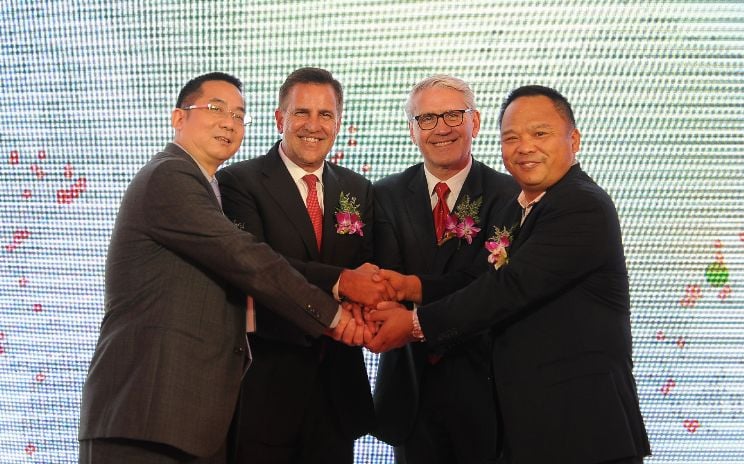
From Factory Worker to Billionaire: The Rise of Ma Jianrong's Textile Empire
The narrative of an ordinary individual ascending to extraordinary wealth is always compelling, but few stories encapsulate the spirit of entrepreneurial grit and strategic vision quite like that of Ma Jianrong. Born into a working-class family in China, Ma Jianrong's journey from a humble factory floor to leading one of the world's largest knitwear manufacturers, Shenzhou International Group Holdings, is a testament to the transformative power of dedication and astute business acumen. His remarkable ascent has not only shaped the global textile industry but also built an impressive personal fortune, elevating his
ma jianrong net worth to the ranks of global billionaires. This article explores the intricate details of his rise, the pivotal decisions that fueled his success, and the enduring legacy of his textile empire.
The Humble Beginnings: A Foundation Forged in Textiles
Ma Jianrong's story is deeply intertwined with China's monumental economic reforms that began in the late 1970s. Born in 1965 to a textile worker, Ma was immersed in the world of fabrics and machinery from a young age. At just 13, he followed in his father's footsteps, beginning an apprenticeship at a local textile mill. This wasn't merely a job; it was an intensive education in the practicalities and intricacies of the industry. From operating looms to understanding thread counts, he gained invaluable hands-on experience, laying a robust foundation of expertise that would prove critical in his future endeavors. This period of his life reflects a common thread among self-made magnates: a deep, fundamental understanding of their chosen field, cultivated through tireless effort at the grassroots level. It was this practical knowledge, combined with an innate drive, that would eventually allow him to perceive opportunities where others saw only challenges, significantly impacting his future
ma jianrong net worth.
The economic landscape of China at the time was rapidly evolving. The decollectivization of agriculture, the opening to foreign investment, and the nascent allowance for private enterprise created an environment ripe for transformation. While many of China's state-owned enterprises struggled with declining state funding, these reforms inadvertently opened doors for those with vision and initiative.
Seizing the Moment: The Birth of Shenzhou International
The pivotal turning point in Ma Jianrong's career, and indeed the genesis of Shenzhou International, arrived in the late 1980s. At this time, his father had risen to manage a state-owned textile plant in Shenzhou. However, like many enterprises of its kind, the plant was in distress, grappling with financial shortfalls and inefficiency. Recognizing an unparalleled opportunity within China's second wave of economic reforms – which included the lifting of price controls and the privatization of numerous state-owned businesses – Ma Jianrong and his father made a bold move. They assumed control of the struggling, loss-making textile plant.
This was no small feat; it required immense courage, strategic foresight, and a willingness to take on significant risk. Their immediate challenge was to revitalize the floundering operation. Instead of merely continuing old practices, they embarked on a strategic overhaul, fundamentally changing the plant's focus to align with emerging market demands. This daring decision laid the groundwork for what would soon become Shenzhou International. Their ability to transform a failing state asset into a thriving private enterprise not only saved jobs but also unlocked immense potential, directly contributing to the exponential growth that would underpin
Ma Jianrong's $4.1 Billion Net Worth: Building Shenzhou International.
Strategic Mastery: Vertical Integration and Global Expansion
What truly set Shenzhou International apart, especially in a competitive market, was Ma Jianrong's strategic genius, particularly his embrace of
vertical integration. While many Chinese textile businesses at the time pursued diversification, venturing into unrelated fields to mitigate risk, Ma Jianrong chose a different path. He focused intensely on mastering every single stage of knitwear manufacturing, from yarn spinning and knitting to dyeing, printing, and garment production. This end-to-end control allowed Shenzhou International to:
*
Ensure unparalleled quality: By overseeing every process, Ma could maintain stringent quality control standards, a non-negotiable for global brands.
*
Optimize costs: Eliminating intermediaries and streamlining processes led to significant cost efficiencies.
*
Accelerate production cycles: Integrated operations meant faster turnaround times, a critical competitive advantage in the fast-paced fashion industry.
*
Innovate rapidly: Direct control over R&D and production allowed for quicker adoption of new technologies and materials.
This unwavering focus on knitwear and vertical integration proved to be a masterstroke. Shenzhou International became an indispensable supplier to some of the world's most iconic sportswear brands, including Nike, Adidas, Uniqlo, and Puma. These global giants rely on Shenzhou for its consistent quality, reliability, and ability to meet demanding production schedules.
Ma Jianrong: The Self-Made Tycoon Powering Nike and Adidas Production highlights this critical relationship.
Furthermore, Ma Jianrong demonstrated a keen understanding of global market dynamics by expanding Shenzhou's manufacturing capabilities beyond China. Establishing major production hubs in Vietnam, for instance, allowed the company to diversify its supply chain, access new labor markets, and navigate evolving international trade policies, further solidifying its competitive edge and contributing significantly to the immense
ma jianrong net worth.
The prevailing wisdom at the time suggested that "first-class businesses set the standards, second-class businesses created the brands, and third-class businesses produced the products." Ma Jianrong, through Shenzhou, redefined this hierarchy. By becoming a *first-class producer*, meticulously setting the standards for quality and efficiency in manufacturing, he made his company an indispensable partner, effectively leveraging the power of production itself to build a global brand in its own right – a brand synonymous with reliability and excellence behind the scenes of countless household names.
Lessons from a Textile Titan: Insights for Aspiring Entrepreneurs
Ma Jianrong's journey offers invaluable lessons for anyone aspiring to build a successful enterprise:
1.
Deep Industry Knowledge is Power: Starting as an apprentice, Ma built an unparalleled understanding of the textile industry from the ground up. This granular knowledge informed every strategic decision, from operational efficiencies to product innovation.
2.
Strategic Focus Over Diversification: While diversification can spread risk, intense focus, as exemplified by Shenzhou's knitwear specialization, can lead to market dominance and unparalleled expertise.
3.
Vertical Integration as a Competitive Edge: Controlling the entire supply chain offers significant advantages in quality, cost, speed, and innovation. It makes a company more resilient and responsive.
4.
Adaptability and Seizing Opportunity: Ma and his father didn't shy away from a struggling plant; they saw potential in a changing economic landscape and acted decisively. Being able to pivot and adapt to new market realities is crucial.
5.
Quality and Reliability Build Lasting Partnerships: Becoming an indispensable supplier to global brands wasn't accidental. It was built on a foundation of consistent quality, timely delivery, and ethical practices. Forging such trust is paramount in any B2B relationship.
6.
Think Globally from the Outset: While starting locally, Ma recognized the importance of international markets and diversified production capabilities to maintain competitiveness and resilience.
These principles, applied rigorously and consistently, transformed a local struggling factory into a global powerhouse, defining Ma Jianrong's legacy and shaping his phenomenal net worth.
Conclusion: A Legacy Woven in Success
Ma Jianrong's trajectory from a textile factory worker to the billionaire chairman of Shenzhou International is a powerful narrative of ambition, strategic brilliance, and relentless execution. His story is not just about accumulating wealth, but about fundamentally transforming an industry, creating jobs, and playing a crucial role in the global supply chain for some of the world's most beloved brands. His unwavering commitment to quality, combined with a foresight to embrace vertical integration and global expansion, has cemented Shenzhou International's position as a leader. The staggering
ma jianrong net worth he has amassed is merely a reflection of the immense value he has created, proving that with deep expertise, a clear vision, and the courage to seize opportunities, extraordinary success can be woven from the humblest of beginnings. Ma Jianrong stands as a towering figure, an embodiment of the self-made spirit, and an enduring inspiration for entrepreneurs worldwide.